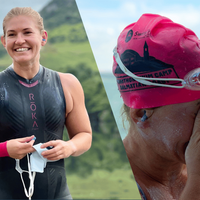
Whether you're preparing for a competitive open water swimming event or dreaming of completing a legendary channel swim, the key to success is preparation - physically, mentally, and strategically.
Open water swims, particularly ultra endurance swims like the English Channel, require specific training techniques, knowledge of conditions, and a high level of endurance. With the right coaching and support, you can tackle these goals with confidence.
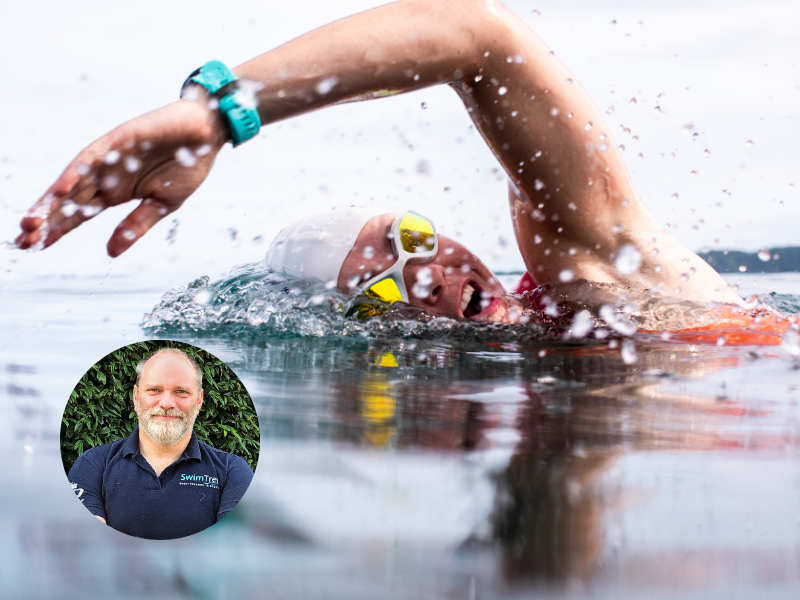
Hear from Ray, one of SwimTrek’s expert guides and long distance-training swimming coaches, here to share his top tips on training for a long-distance event, no matter where you currently are on your swimming journey.
Ray’s Top Tips for Preparing for Endurance Swimming Events
Mind Management
This is absolutely fundamental for success in all things challenging. There’s an old and true saying in endurance swimming “It’s 80% mental and 20% the rest”. I once heard this misquoted as “80% mental and 20% in your head” – which while amusing is probably closer to the truth. You can have everything else completely sorted and have the most beautiful swimming conditions, but it won’t get you to the end if your head is not in the right place.
The mind is so powerful, it can overcome just about anything - which is a double-edged sword: Your mind can talk you into success when all else seems lost or it can talk you into quitting even when everything is going right. The good news is that whatever your previous experiences, you can learn to be more in charge of what goes on in between your ears. The mind is like a muscle: it can be trained to be habitually more resilient, more positive, more focussed, more persistent, more reliable and more disciplined.
If you spend time with me on one of SwimTrek’s Long Distance Training (LDT) camps, I will share my bag of tricks with you, but here’s some fundamentals to get you going:
1. Find your ‘why’: Identifying a compelling reason to undertake your planned swim will help you maintain motivation when it inevitably becomes uncomfortable. Perseverance is built on a foundation of purpose.
2. Visualise success: During training, regularly visualise yourself successfully completing the swim. Your subconscious cannot tell the difference between your actual experience and your imagined experience. Feed it good, positive helpful ‘movies’ in preparation, and it will reward you with positive confident messages when you swim. Channel swimmers often speak of the power of mental visualisation, especially during difficult stretches of their training and the swim itself.
3. Prepare for the unexpected: Open water swimming is unpredictable: Weather, waves and wildlife encounters are just some of the challenges swimmers face. Accepting the unknown and learning to adapt on the fly is a critical skill. Acceptance of the uncontrollables is a skill that can be learned, and I have some specific techniques that I share with swimmers on the long distance training camps.
4. Build confidence: Training in similar conditions to your event environment will help build your confidence. Knowing that you can handle the water temperature, currents, and duration of the swim will help reduce anxiety when the day comes.
Fuelling Well
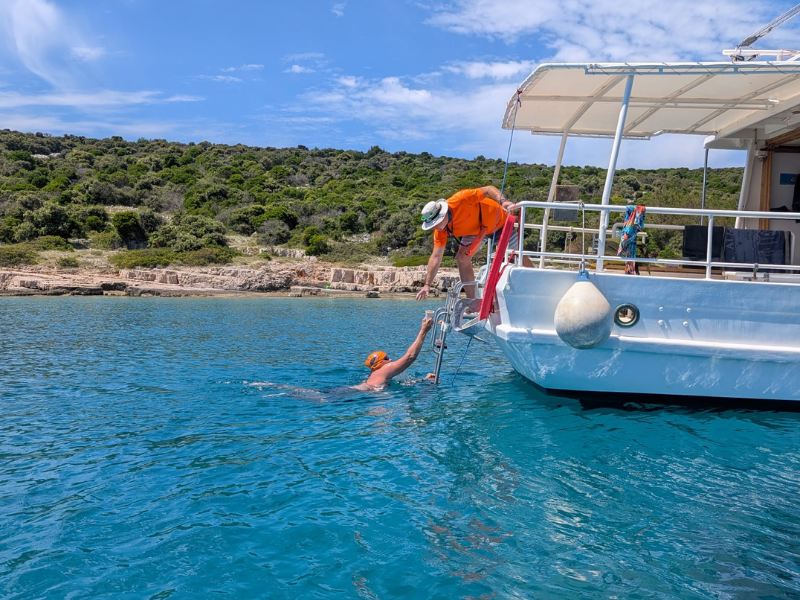
The next most important thing to get right is your fuelling and nutrition plan. This becomes increasingly important the longer you spend swimming.
If your swim is under an hour or two, you most likely don’t need to feed during the swim at all. Up to four hours, whatever you choose to fuel on will pretty much work to a greater or lesser degree. Over four hours of swimming and you will need to be thinking carefully about your fuelling plan. After 12 hours of swimming, you’d better have that fuel plan nailed down tight or it’s likely that ‘the wheels will fall off’.
So, what to eat and when? How much? How frequently?
There is no single answer that is best for all of us in all circumstances – so I encourage swimmers to experiment on themselves to find their own best answer. This takes time and patience – and likely many lessons. We’ve all been there: I once swam the length of Windermere and learned that it’s hard to tread water and breathe while chewing and holding half a carrot in one hand and half a pork pie in the other. Tough day out.
Some things remain true for all of us though:
Carbs are a more ‘available’ fuel than fat or protein
Fat and protein can be tasty and filling
Drinks are quicker and easier to consume than solids
Solids can be more fun
Unless the water is warm, you will need warm feeds
You will need to balance energy in and energy out, in terms of calories per hour.
Many endurance swimmers use warm carb drinks as their main fuel source and little treats of solid foods as a motivation tool.
During the long distance-training camps I go into the science behind these aspects and show how metabolic efficiency and flexibility are key to success – and I share tips on how you can develop these in your swimming.
Swimming Well
If you are going to swim a big distance, then you’ll be covering an even bigger distance throughout your training. If your swim is say 33km, then it’s possible you’ll cover up to that distance per week in the height of your training. Over the months of training, that is a lot of strokes.
It is essential therefore that your stroke does not cause you injury. The point of training is to get you to the start line in the best condition possible to ensure success. Sure, you will need to overcome some uncomfortable challenges along the way, but there’s no point in mashing yourself into a pulp before your big swim.
Work with a good coach to develop a stroke that is injury-free. This can take months of frustratingly slow swimming while you work on your technique – but it is time well spent.
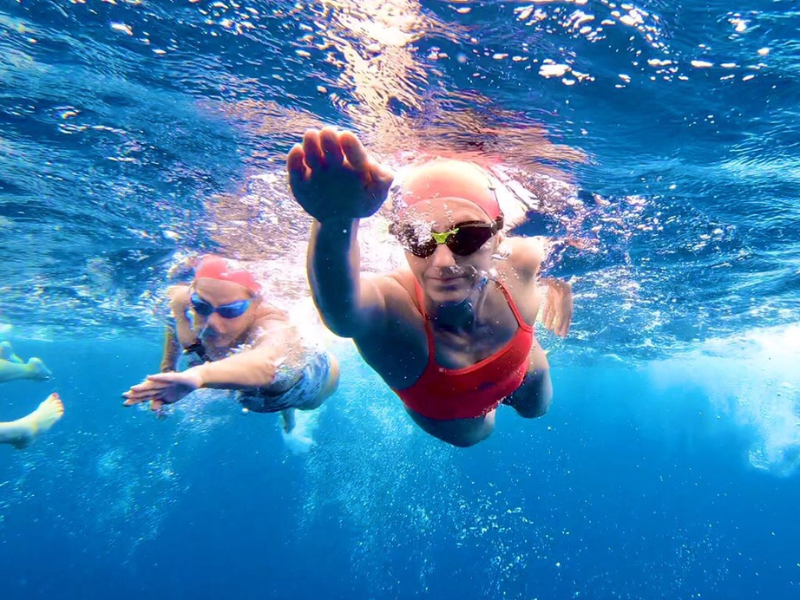
Secondly – and tying in with my point above about managing your calories per hour – develop an efficient stroke to maximise speed and distance for the same energy. Principally, this means becoming more horizontal and streamlined in the water and maintaining a good ‘grip’ with the water as you pass through it. Don’t waste energy on anything other than smooth forward propulsion.
The key is to be efficient and injury-free. Once you have that solid foundation, then you can add layers of speed and endurance and tolerance to the cold. During the LDT camp, where conditions allow, we use an underwater camera to video you swimming and provide feedback on your stroke.
SwimTrek Coaching Camps: Perfect for Channel Swim Preparation
SwimTrek is renowned for its long-distance open water coaching camps, designed for swimmers aiming to take on big challenges from marathon swims of around 10km to ultra-endurance events such as the English Channel and other longer swims. Our Marathon Swim Camps are designed to build swimmers up to a 10km swim during the course of the programme. The Channel and Long Distance Training Camp is for those swimmers who are ready to start their journey towards the Channel (or other long distance swims) by working past their comfort zones into the territory of ultra-marathon swimming in a safe and supportive environment.
We often get repeat guests on these trips, many of whom have already completed ultra-distance swims and use these camps as way to kick-start their summer training. They are often very inspiring to those swimmers just starting out, adding to the great camaraderie participants always enjoy on these trips. These camps are run by coaches who are experienced long- distance swimmers and cold water swimmers themselves, many of whom have completed these camps in their own training too! The camps are held in a stunning, open water location and focus on all aspects of swim preparation.
So what can you expect on one of these camps?
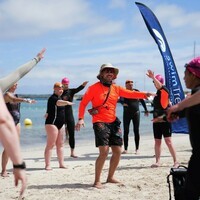
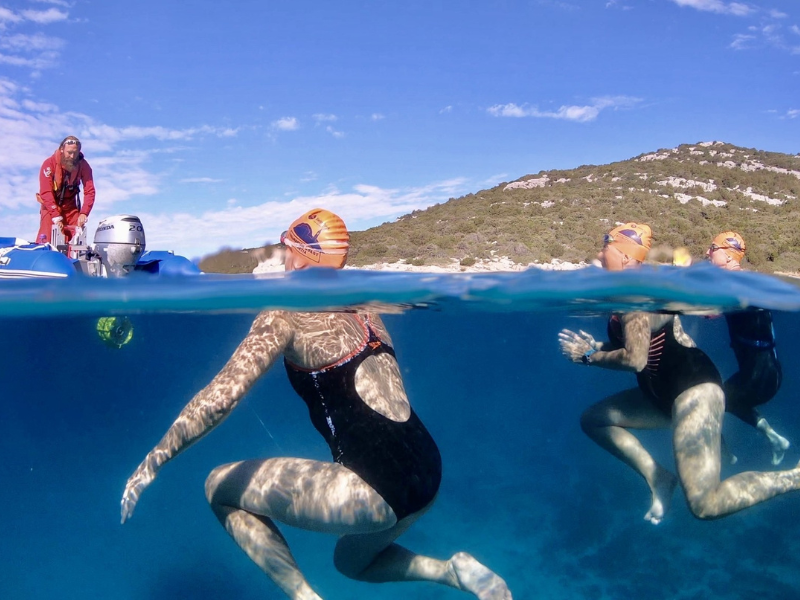
Open water skill development: SwimTrek’s coaching camps offer focused open water training, combined with in-depth video analysis of technique delivered by coaches with extensive backgrounds in endurance swimming. The coaches will film you both above and below the water while you swim and work on key elements of open water swimming to help you to work on more efficient stroke, with a focus on reducing injury, improving and adapting your pacing, and adapting to different water conditions.
Endurance training: The camps include swims that are designed to increase endurance, allowing swimmers to test their limits in a supportive and controlled environment. These training sessions are tailored to help you simulate the conditions of a long-distance swim, from temperature acclimatiszation to handling choppy waters.
Mental coaching: SwimTrek’s coaches also provide strategies to manage the mental challenges that come with long-distance swims. These sessions focus on building resilience, focusing on positive thoughts, and preparing for the unknowns of Channel swims and other endurance events.
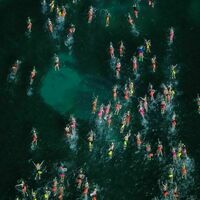
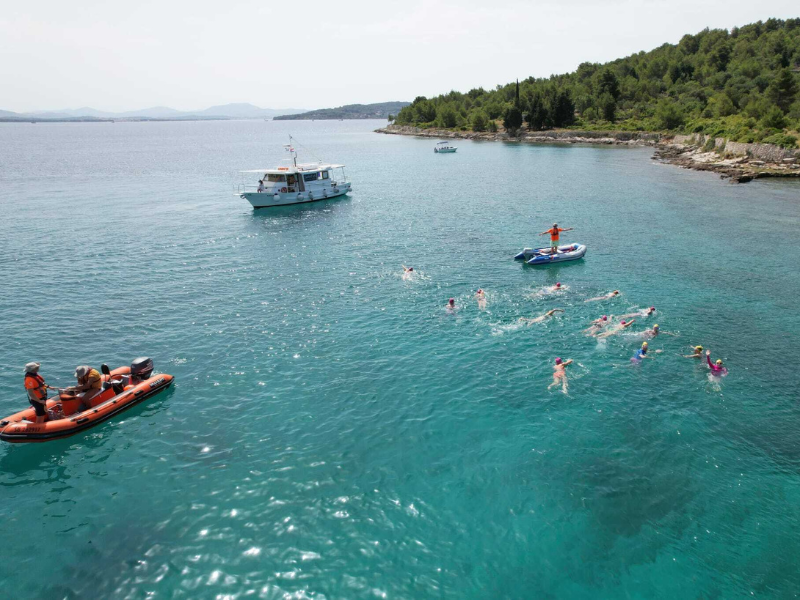
Training Swims: The coaches will set up swim circuits, as large as is safe to do in the most sheltered areas available, marked by large brightly coloured buoys, where all participants can swim at their own pace around the circuit. Participants come into the main boat feeding station as often as they need to for a variety of nutrition options and encouragement, while being closely watched and encouraged by two more coaches patrolling the circuit in safety boats.
Optional six-hour qualification swim: For swimmers preparing for specific ultra marathon events, SwimTrek’s Channel and Long Distance training camp offers the opportunity to complete a 6-hour qualifier swim – the time of year and location usually offers water cold enough to qualify for an English Channel swim (6 continuous hours in 16°C or colder). A number of swimmers return year after year to complete this programme to kick-start their training season while others who are in their first steps to long-distance swimming use this camp as way to test their limits in a safe and supportive (and hugely inspiring!) environment.
Night-time swim experience Channel swims may start or end in the dark as their start time will likely be chosen for the right tide and weather, rather than time of day. Swimming at night is an important part of preparing yourself physically and mentally. The night swim gives swimmers an introduction on how to navigate this
Seminars SwimTrek’s Channel and Long Distance training camp offers the option to attend short talks on relevant topics given by SwimTrek’s expert swim guides. These interactive sessions encourage the experienced endurance swimmers to share their expertise with the group.
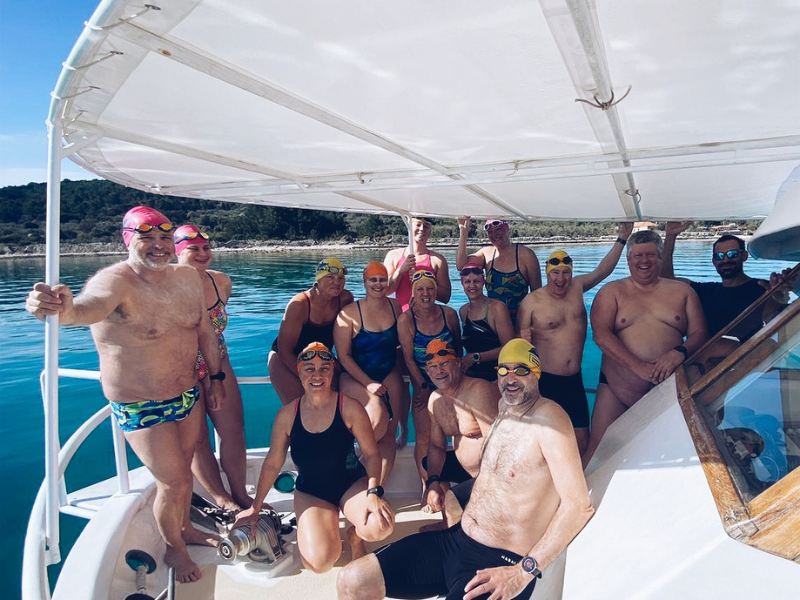
Building a Community of Swimmers
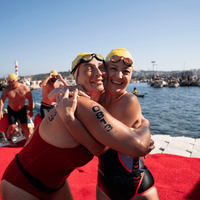
Another major benefit of SwimTrek’s coaching camps is the sense of community. Swimmers from around the world gather in these camps to share experiences, challenges, and triumphs.
This camaraderie is invaluable, especially for channel swimmers who may have long solitary training sessions ahead of them. The SwimTrek community is supportive, with many SwimTrekkers forming lasting connections and offering encouragement before, during, and after their swims.
Preparing for Your Channel Swim: A Final Thought
Whether you’re tackling a marathon or an ultramarathon swim, preparation is key. With the right training, support, and mindset, you can achieve your swimming goals. SwimTrek’s coaching camps offer the ideal environment to hone your skills, build endurance, and connect with fellow swimmers who share your passion. With expert coaching, mental preparation, and event simulation, you'll leave the camp equipped with an armoury of tactics, endurance experience, mental tools, and great connections to face the exciting journey to completing your swim!
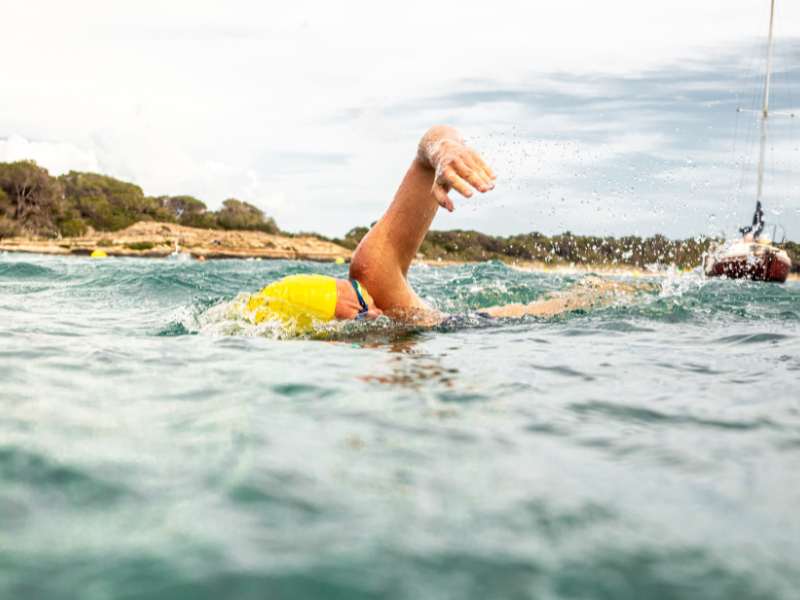
Want to learn more?
Seeking more knowledge about any of our trips - dates of travel, kit lists and further itinerary information - please don’t hesitate to reach out to us on info@swimtrek.com.